Bookkeeping basics: setting up accounting after starting a business
A document, a posting and a payment are different steps. Understanding their connection helps establish accounting from the first day of business.
Quick answer
Bookkeeping records business transactions using supporting evidence and makes their financial effects traceable. In double-entry accounting, total debits equal total credits for each posting. Whether German cash-basis profit calculation is permitted or balance-sheet accounting is required depends on the applicable legal conditions.
Key takeaways
- Accounting becomes expensive when documents, payments, and responsibilities remain unclear until the first deadline.
- During the second week, create one reliable intake and storage process.
- The goal is not immediate full automation.
A 30-day accounting setup for a new business
Accounting becomes expensive when documents, payments, and responsibilities remain unclear until the first deadline. During the first week, define ownership, a business payment account, invoice numbering, document intake, and the handover to your tax advisor. The exact accounting and reporting obligations depend on the legal and tax situation and should be confirmed professionally.
During the second week, create one reliable intake and storage process. Keep the original record, add a visible processing status, and make corrections traceable. In weeks three and four, run the first complete monthly cycle: import bank activity, connect records, review unpaid invoices, resolve exceptions, and test the required export.
The goal is not immediate full automation. It is a repeatable routine in which every record has an owner, every exception is visible, and every handover can be reproduced.
Sources and further information
The basics: documents, accounts and postings
A supporting record documents an event, such as a supplier invoice or bank payment. An account classifies its effect on cash, receivables, expenses or another category. A posting connects the amount, date, accounts and evidence. Saving an invoice file is not the same as reviewing and posting it.
Debit means the left side of an account and credit the right. They do not universally mean minus and plus. For an asset account such as bank, increases are debits and decreases credits. An increase in a liability, by contrast, is a credit. The transaction determines which accounts are affected.
Sources and further information
An example from purchase to payment
A simplified example excludes VAT. A business receives €100 of consumed office supplies on account. It debits office expense €100 and credits trade payables €100. When paying, it debits trade payables €100 and credits bank €100. The payment does not create the expense again.
Debits and credits are equal in both postings. This does not count the expense twice: the first entry records the obligation and the second its settlement. Real transactions may require VAT, input VAT, accruals and other checks. Account numbers must match the chart actually configured.
Sources and further information
Determine the accounting method before setup
German cash-basis profit calculation under section 4(3) EStG is generally available where no statutory bookkeeping obligation exists and the business does not voluntarily keep books and prepare accounts. It compares business receipts and expenditure under the relevant rules. It still requires evidence and includes exceptions to merely reading bank movements.
Balance-sheet accounting additionally addresses assets, liabilities and recognition in the proper period. Legal form, commercial law and potential tax bookkeeping obligations must be considered together. The small-business VAT exemption does not answer this question. Agree the method before importing historical data, then follow the practical 30-day plan.
Related workflows in accuno
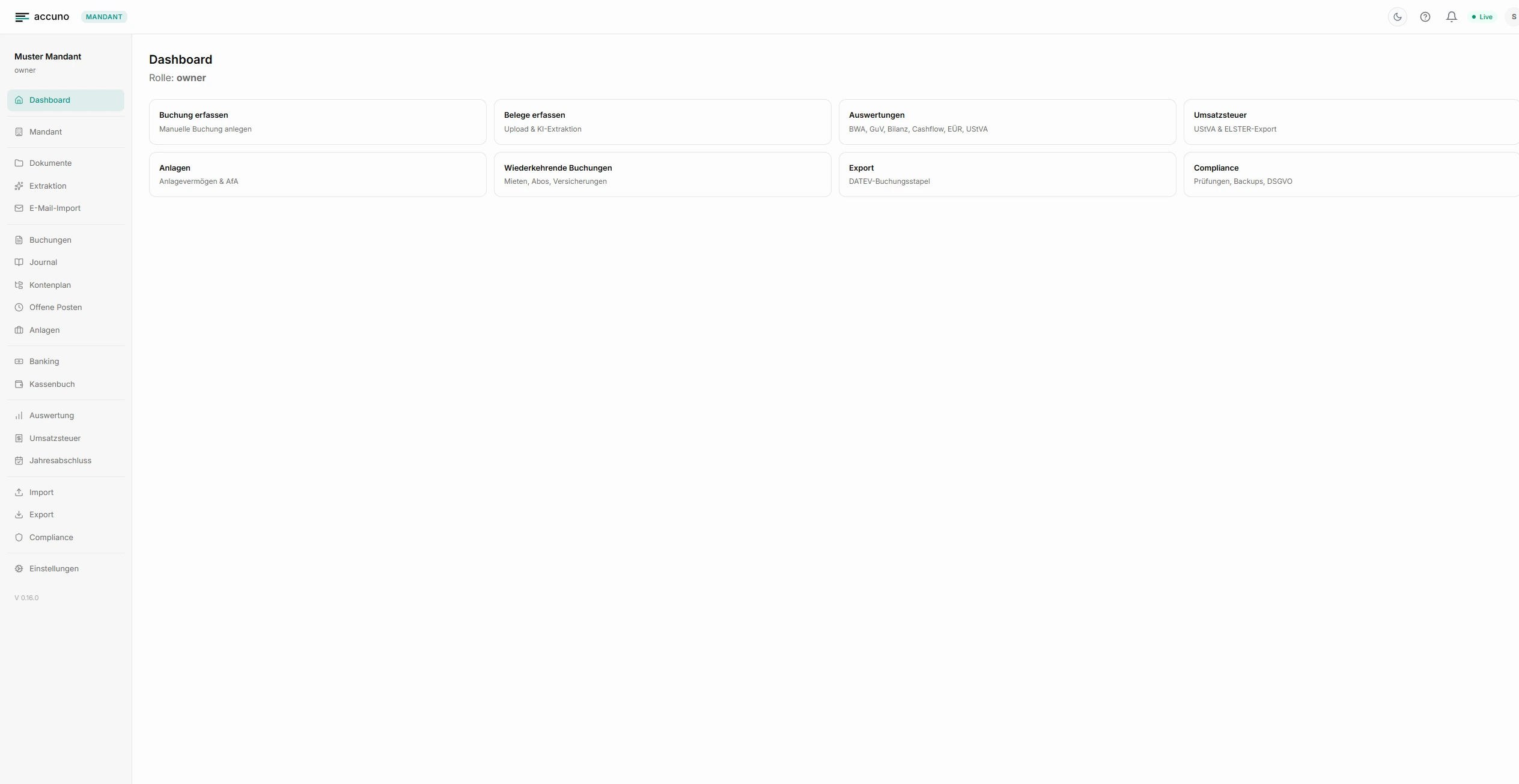
These product pages show how accuno supports the workflows described in this guide.
Sources and further information
- Section 238 HGB: accounting and traceability
- Section 239 HGB: traceable accounting records
- Section 252 HGB: realization and accrual accounting
- Section 4 EStG: profit, withdrawals and contributions
- Section 242 HGB: balance sheet and annual accounts
- Section 141 AO: tax accounting obligations and commencement
Editorial note
Prepared by the accuno Editorial Team and reviewed against the listed primary sources and the implemented product scope.
These articles provide general guidance and do not replace legal, tax, or business advice. Confirm your specific situation with a qualified professional.