E-invoicing in Germany in 2026: what businesses should prepare
A PDF and an e-invoice are not the same. Structured data, reliable receipt, and traceable processing matter.
Quick answer
German businesses have had to receive structured e-invoices since 2025. In 2026, they should reliably monitor intake, validate structured formats, perform a business review, and retain the unchanged original.
Key takeaways
- A plain PDF is not a structured e-invoice.
- Receipt, technical validation, and business approval are separate steps.
- Test XRechnung and suitable ZUGFeRD variants in the real workflow.
Structured, not merely digital
A German e-invoice contains structured data that software can process. A plain PDF does not meet that definition for this purpose. XRechnung and suitable ZUGFeRD profiles are common examples; the latter can combine machine-readable invoice data with a human-readable PDF view.
Preserve and validate the structured original. A visual rendering helps reviewers but does not replace the source data, and transforming a file for display should not break the relationship with the unchanged original.
Sources and further information
What applies in 2026
German businesses have had to be able to receive e-invoices since 1 January 2025. The Federal Ministry of Finance describes transitional issuing rules through 2026 and, for qualifying issuers with prior-year revenue up to EUR 800,000, through 2027.
The transition period should be used to test intake, format validation, responsibilities, retention, and the handover to accounting. Specific tax and legal cases should be confirmed with a qualified advisor.
Sources and further information
A reliable intake process
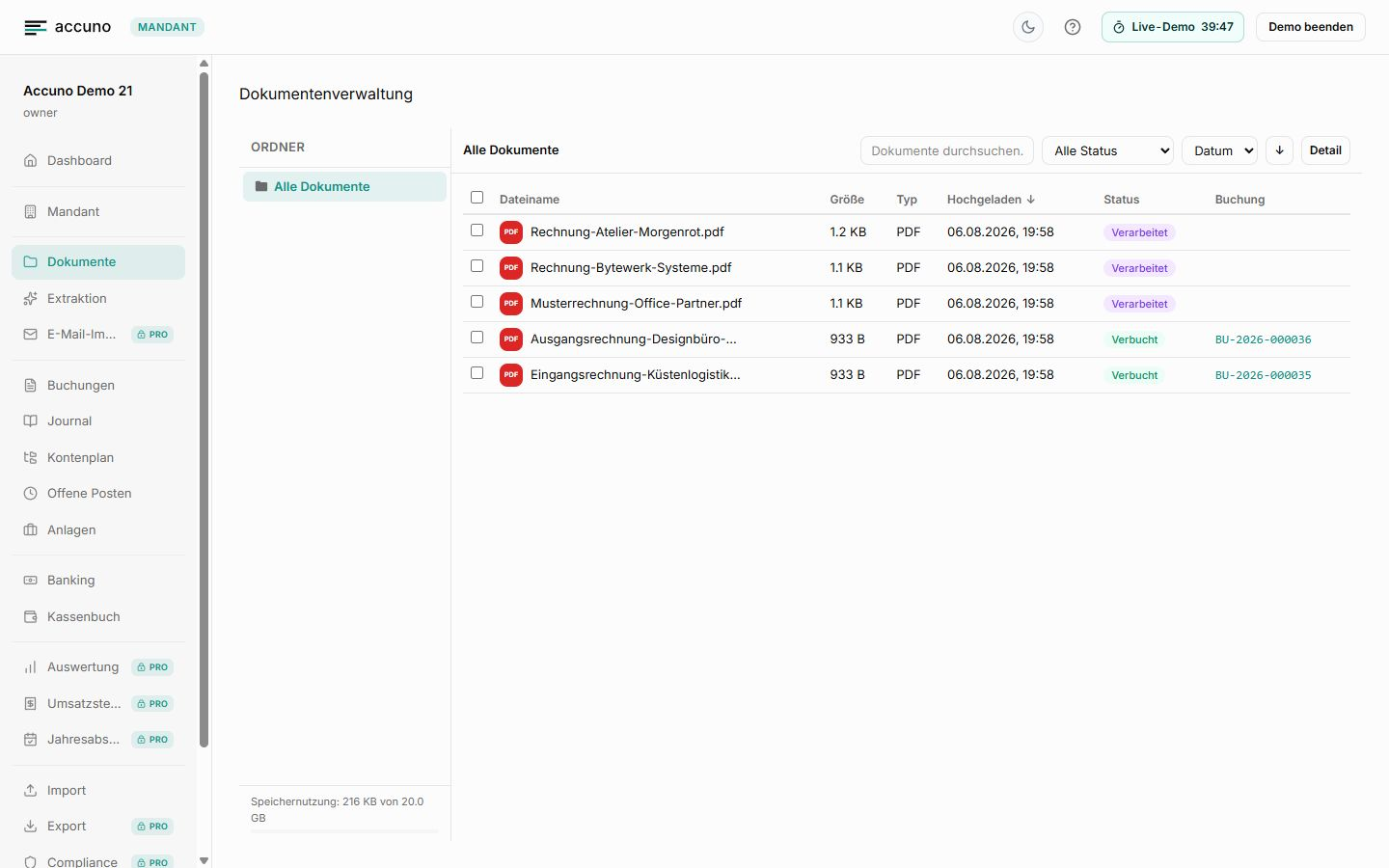
A dedicated mailbox or upload channel is only the entry point. Technical validation and business approval need separate, visible statuses so a structurally valid invoice is not mistaken for an approved expense.
- Monitor the intake channel and define backup ownership.
- Validate the syntax and supported invoice profile.
- Compare supplier, invoice number, totals, and tax data with master data.
- Keep the original file unchanged and log processing steps.
- Check duplicates across all intake channels.
- Return invalid files through a documented exception workflow.
Automation is not approval
Structured data reduces manual entry but does not prove that goods were delivered, prices are correct, the tax treatment applies, or bank details are trustworthy. Technical extraction, business validation, and posting approval remain different controls.
A controlled workflow shows both the imported original and later corrections. That distinction allows teams to gain speed from structured data while keeping the decision and its accountable reviewer visible.
Related workflows in accuno
These product pages show how accuno supports the workflows described in this guide.
Sources and further information
Editorial note
Prepared by the accuno Editorial Team and reviewed against the listed primary sources and the implemented product scope.
These articles provide general guidance and do not replace legal, tax, or business advice. Confirm your specific situation with a qualified professional.