Managing cash flow by connecting open items and bank activity
A bank balance looks backward. Useful cash-flow management adds due receivables, liabilities, and realistic dates.
Quick answer
A useful cash-flow view combines current bank balances with due receivables, liabilities, and realistic payment dates. Open items and bank activity must be reconciled continuously, including partial payments.
Key takeaways
- A bank balance does not show upcoming inflows and outflows.
- A short weekly open-item and bank routine creates earlier warnings.
- Partial payments and discounts must update the remaining open balance correctly.
Bank balance is not cash flow
A current bank balance excludes tomorrow’s supplier payment and an overdue customer invoice. A useful operating view combines available funds with expected receipts, known liabilities, and realistic payment dates.
Open items are the foundation, but only if due dates, partial payments, disputed balances, and credits are maintained correctly. Otherwise the forecast looks precise while relying on balances that no longer represent the underlying transactions.
Sources and further information
Build a weekly routine
A short weekly routine is often more useful than an elaborate annual forecast that is rarely updated. Focus first on the next four to thirteen weeks and separate confirmed movements from assumptions.
- Import and assign all recent bank activity.
- Prioritize overdue receivables by age, amount, and customer context.
- Review material liabilities due within the next four weeks.
- Apply partial payments, discounts, and credits to the correct open item.
- Record uncertain payment dates as scenarios rather than guaranteed cash.
Matching supports decisions
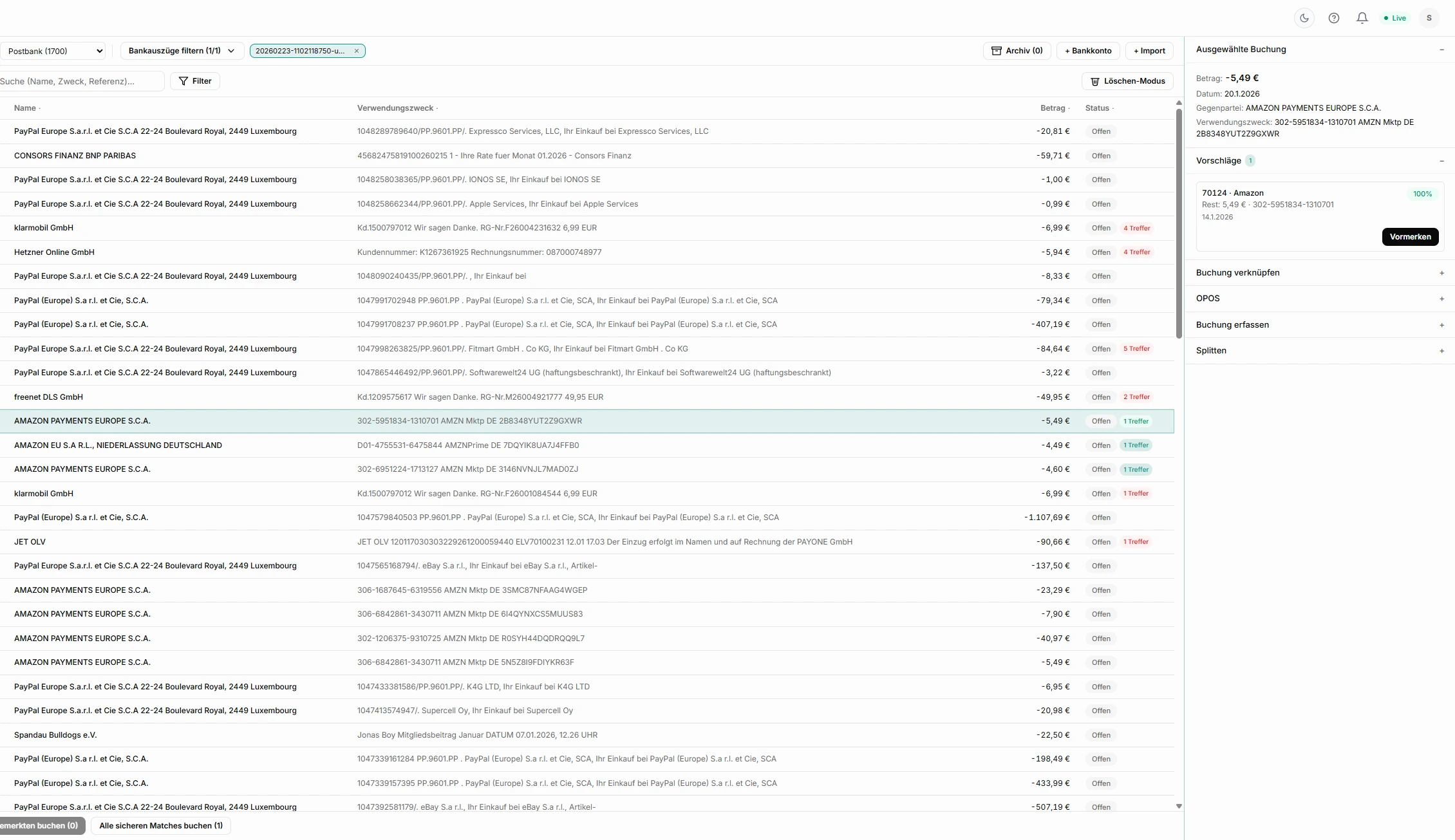
Amount, reference, counterparty, IBAN, and date can produce a plausible match. Differences caused by partial payment, fees, discount, or a batch transfer are normal and should remain visible for review.
After confirmation, the system must retain which bank transaction settled which open item and by what amount. The remaining balance should be immediately available for another payment or a documented write-off.
Define early warning signals
Watch overdue receivables, unresolved bank activity, unusually large near-term payments, and widening gaps between recognized revenue and actual receipts. A negative balance is not the only meaningful warning.
These signals support earlier action: clarify disputes, prioritize reminders, renegotiate terms, or move discretionary spending before the bank balance becomes the problem.
Related workflows in accuno
These product pages show how accuno supports the workflows described in this guide.
Sources and further information
Editorial note
Prepared by the accuno Editorial Team and reviewed against the listed primary sources and the implemented product scope.
These articles provide general guidance and do not replace legal, tax, or business advice. Confirm your specific situation with a qualified professional.